

What Is a Feeder Fund? A Guide for Real Estate Investors
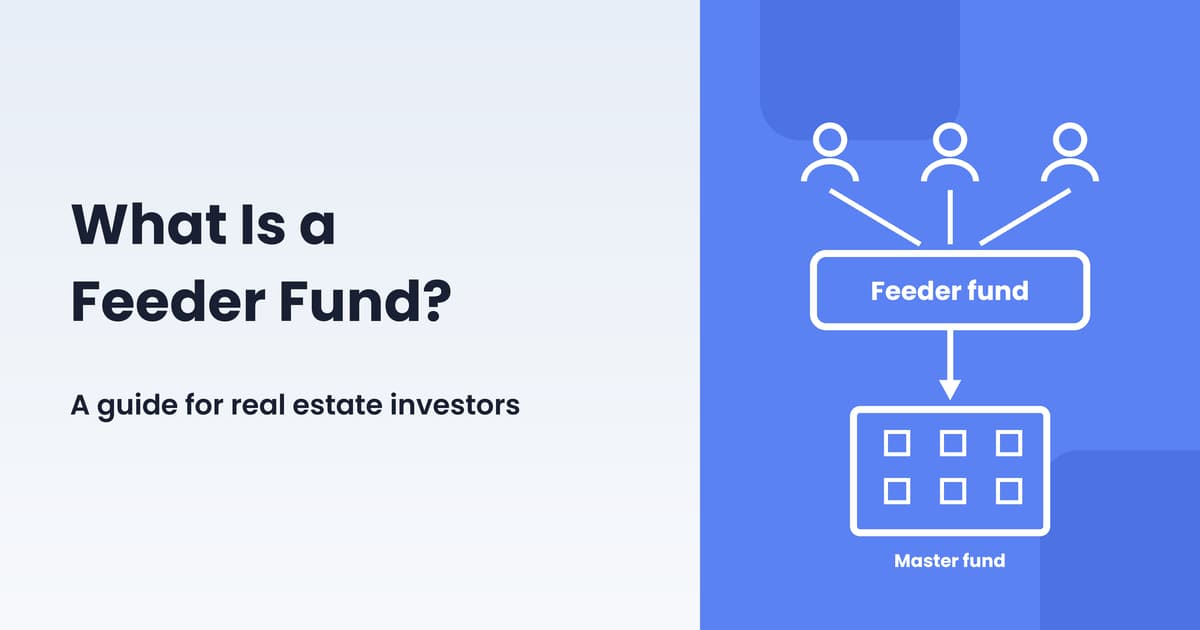
A feeder fund is an investment vehicle that pools capital from investors and invests that capital into another fund, called a master fund. That’s the whole mechanism. What makes it worth understanding is what the structure unlocks for sponsors, capital raisers, and investors. So this guide covers how feeder funds work. It also covers how Cash Flow Portal supports feeder funds end to end.
What Is a Feeder Fund?
Picture a syndication raising capital for a large multifamily deal. The sponsor runs the main investment entity, the master fund. Instead of every investor writing a check directly to the master fund, a feeder fund sits in between. Investors put their money into the feeder. Then the feeder makes one combined investment into the master fund.
As a result, the entire feeder appears as a single limited partner on the master fund’s books. Meanwhile, the feeder fund has its own manager, its own investors, and its own offering documents. Returns flow from the master fund into the feeder. From there, the feeder distributes them to its investors under its own terms.

Why the Structure Exists
For the sponsor, feeder funds turn capital raising into a channel. Instead of collecting dozens of individual checks, the sponsor receives one large check per feeder. The cap table stays cleaner. In addition, each feeder manager brings their own network, so the deal reaches investors the sponsor would never have met. Because those are a partner’s investors inside your deal, the details matter on both sides. How is accreditation handled? What visibility does each party have? How do communications flow? Those are exactly the questions a sponsor should put to any feeder platform.
For the capital raiser who manages a feeder, the structure formalizes the work. Instead of raising one check at a time under someone else’s brand, a feeder manager runs an actual fund. That means their own entity, their own offering documents, and their own investor relationships. Their aggregated capital also arrives at deals as one meaningful LP. In addition, part of why capital raisers adopt the structure is to put their capital-raising business on a properly documented footing. How that applies to your situation is a question for an attorney, and that conversation comes first.
For investors, a feeder fund can be the door into deals and sponsors they couldn’t access directly. However, there’s a tradeoff to understand. You invest on the feeder’s terms, not the master fund’s. Those terms typically include the feeder’s own fees on top of the master fund’s economics. That’s the price of access. It’s also why the feeder’s offering documents are the ones to read closely.
What It Takes to Run One
A feeder fund is a real fund, and it comes with real fund obligations. First, it has to be formed properly, with its own offering documents, which is why formation runs through attorneys. Second, its economics have to be built correctly. The feeder receives the returns flowing down from the master fund. Then it applies its own terms on top, so each investor gets paid the way the documents define. Finally, it runs its own books, sends its own distributions, communicates with its own investors, and issues its own K-1s every tax season. We covered why that back office is the heavy half of a raise in Best Tools for Capital Raisers. A feeder fund carries all of it.
In short, the structure is powerful, but it’s a lot to operate by hand.
How Cash Flow Portal Supports Feeder Funds
Cash Flow Portal was built to make the feeder structure practical to run.
Formation starts with attorney-led setup for the fund and its offering documents. Then, once a master fund manager creates an offering, the feeder inherits the offering structure automatically. Terms stay consistent between master and feeder without re-entry. Waterfall structures also sync from the master fund with built-in calculation logic. As a result, the deal’s economics carry through to every investor class the way the documents define them.
Each feeder manager gets a fully branded investor portal for their own investors. They keep full control over reporting, communications, and the investor experience. Day-to-day operations run in the same system: double-entry accounting, distributions, investor reporting, and year-end K-1s in one place. In addition, when the master fund sends an update, it propagates to every feeder automatically. Investor messaging stays consistent across entities with no extra effort.
The result: a capital raiser can operate a feeder fund like a real business, without assembling a back office from scratch.
Is a Feeder Fund Right for You?
If you’re raising capital deal by deal and want a repeatable, formalized channel, the feeder structure is worth a serious look, with an attorney guiding the formation. Similarly, if you’re a sponsor, feeders can multiply your reach while simplifying your cap table. Either way, the structure only works as well as the operations behind it. So it’s worth seeing how feeder funds run on Cash Flow Portal, from setup through K-1s.
About the author

Alex Field
Born into a real estate family, passionate about all things CRE
Related posts

Investor Email Engagement: How to Re-Engage Your Network
By Alex Field | 08/24/26 | Announcements
Every capital raiser notices it eventually. The network feels quieter than it used to. Emails that once drew replies now draw silence, and people who used to engage have drifted. Low investor email engagement is one of the most common problems capital raisers run into, and it tends to surface at the worst time: right […]

506(b) vs 506(c): What’s the Difference for Real Estate Syndicators?
By Alex Field | 08/21/26 | Announcements
Before a syndicator raises a dollar, one structural question shapes everything downstream: is this offering 506(b) or 506(c)? The answer determines who you can talk to, how you can find investors, and what paperwork the raise requires. In short, 506(b) lets you raise privately from people you know with light verification. Meanwhile, 506(c) lets you […]
Guide to K-1s for Real Estate Syndications
By Alex Field | 08/10/26 | Announcements
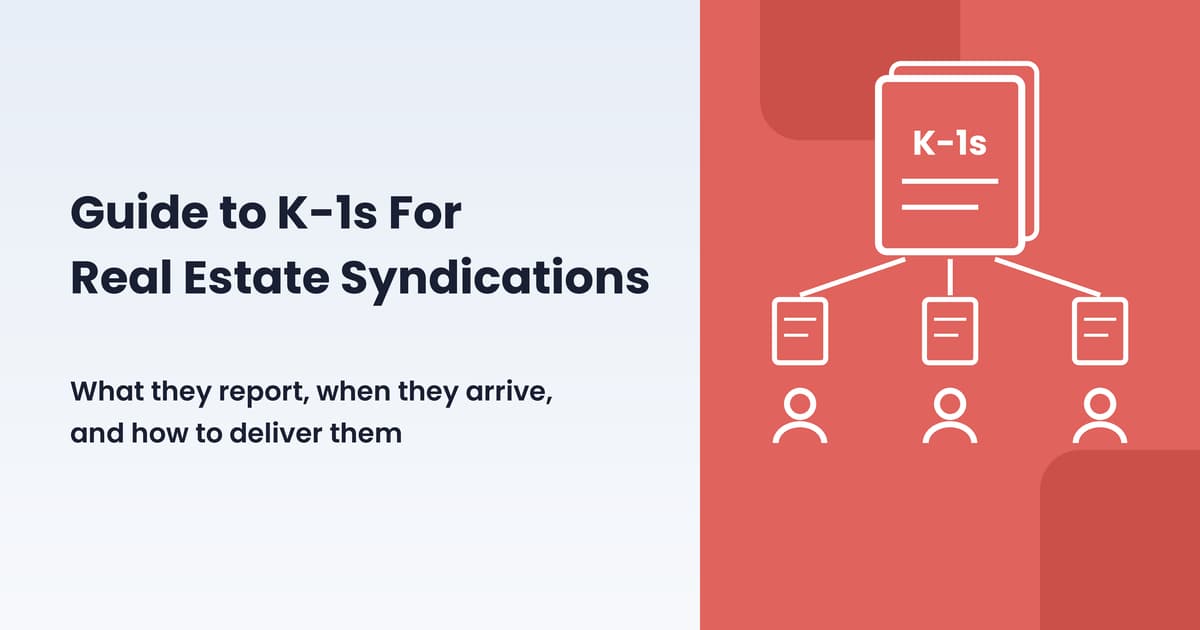
Every investor in a syndication gets a K-1, and every GP has to deliver them. For such a routine form, K-1 season causes a lot of pain on both sides. LPs wait on documents to file their taxes. GPs match hundreds of PDFs to the right people. This guide covers K-1s for real estate syndications: […]
Most popular posts
 AI for Capital Raisers07/08/26 | Guides for syndicators
 Best CRM for Capital Raisers07/01/26 | Guides for syndicators
 The 10 Hottest Cities to Invest in Real Estate Before 202507/20/22 | Announcements
 Bonus Depreciation for Real Estate Professionals09/09/21 | Passive investor guides
 Free tools to help you develop your real estate syndication blog in 202108/06/21 | Guides for syndicators
Categories


 Seattle, WA







Support
Contact usProducts
Capital raising
Why Cash Flow PortalEquity raising simplifiedFunds on Cash Flow PortalCo-sponsorsCustom brandingProperty management
BookkeepingBank syncQuickbooks integrationReportsOwner portalMaintenanceApplications & eSignTenant screeningCRMRent collectionTenant portalCommunicationFund admin
Fund administrationInstitutional fund administrationSPVsFund admin servicesIntegrated CPA servicesBanking
Integrated bankingLeads
New leads©2026 All rights reserved. Cash Flow Portal Inc.